



Beef Liver 101
Beef liver gets talked about in extremes.
At one end, it's the food people remember being forced to eat as a kid. At the other, it's been promoted online as everything from “nature's multivitamin” to the answer to just about every modern nutritional problem.
Neither is particularly useful.
Liver is simply an edible organ with a nutritional composition that is quite different from the beef muscle meat most of us eat regularly.
And that difference is interesting enough without the mythology.
So, here's Beef Liver 101: what liver actually is, what you'll find in it, why retinol is worth understanding, how its iron differs from the iron in many plant foods, what freeze-drying actually does and why eating more liver isn't automatically better.
What actually is beef liver?
The liver is a large organ involved in a huge range of biological processes within an animal.
As food, beef liver falls into the broad category of organ meat, or offal, alongside foods such as heart, kidney and spleen.
Humans have eaten liver for a very long time and it remains part of traditional cooking in plenty of cultures. Depending on where you are, you might find it pan-fried, grilled, minced through other meats, made into pâté or incorporated into sausages and other dishes.
Its flavour is unmistakably liver.
Subtle, it is not.
What makes it particularly interesting from a nutrition perspective, though, isn't its reputation or history.
It's the fact that liver and steak are different tissues.
Why liver isn't nutritionally the same as steak
When most of us think of beef, we're thinking about skeletal muscle: steak, mince, brisket, chuck and similar cuts.
Liver isn't muscle meat.
Different tissues perform different jobs within the animal and have different biochemical compositions. That means a piece of beef liver and a piece of beef steak don't contain nutrients in identical proportions.
Australian and other recognised food-composition data identify beef liver as containing nutrients including:
- vitamin B12
- vitamin A, including preformed vitamin A or retinol
- folate
- riboflavin
- niacin
- iron
- copper
- zinc
- selenium
- protein
That doesn't make liver “complete nutrition”.
It doesn't mean everybody needs to eat it.
And it certainly doesn't mean a small piece of liver contains everything your body needs.
It means liver has a distinctive food-composition profile and some nutrients can occur in comparatively high concentrations.
That's the interesting part.
What's actually found in beef liver?
One problem with talking about liver online is that a perfectly reasonable food-composition fact often turns into a list of promised health benefits two sentences later.
We're not doing that here.
The more useful place to start is simply understanding what's present.
Vitamin B12
Vitamin B12 is a water-soluble vitamin that occurs naturally in animal-derived foods.
Beef liver is recognised in food-composition data as containing vitamin B12, often at considerably different concentrations from conventional beef muscle meat.
That's a composition fact.
It doesn't need an “energy”, “brain” or “performance” promise attached to it.
Folate
Folate is part of the B-vitamin family and occurs naturally in various foods, including liver.
It's also worth distinguishing naturally occurring food folate from folic acid, the form commonly used in fortified foods and supplements. The terms are often used interchangeably in everyday conversation, but they're not quite the same thing chemically.
Riboflavin and niacin
Beef liver also contains the B vitamins riboflavin (vitamin B2) and niacin (vitamin B3).
Again, the concentrations found in liver differ from those found in many other cuts of beef.
Copper
Copper is a trace mineral naturally present in various foods.
Beef liver is well known for containing copper, which is another reason portion size matters when liver is eaten regularly.
Iron, zinc and selenium
Fresh beef liver also contains minerals including iron, zinc and selenium.
The iron deserves a closer look because not all dietary iron is chemically the same. More on that shortly.
Protein
Liver is animal tissue, so unsurprisingly it also contains protein.
But protein isn't what makes liver particularly unusual when compared with a steak. Plenty of conventional cuts of beef provide protein.
The more distinctive part of liver's composition is its particular combination and concentration of micronutrients.
Vitamin A: let's talk about retinol
Vitamin A is one of the most important nutrients to understand if you're going to talk sensibly about liver.
That's partly because “vitamin A” isn't one single dietary compound.
There are two broad categories worth knowing about.
Preformed vitamin A
Preformed vitamin A includes retinol and related compounds found in animal-derived foods.
Beef liver can contain substantial amounts of retinol.
This form is already vitamin A when consumed.
Provitamin A carotenoids
Many plant foods contain provitamin A carotenoids, such as beta-carotene.
The body can convert some of these carotenoids into vitamin A.
So when someone says carrots and liver both “contain vitamin A”, the chemistry behind that statement isn't identical.
Liver primarily provides preformed vitamin A, while many orange, yellow and dark-green plant foods provide carotenoid precursors.
Neither fact needs to become a food fight.
They're simply different dietary forms.
Why more liver isn't automatically better
This is where the “if some is good, more must be better” school of nutrition runs into trouble.
Beef liver can contain very high concentrations of preformed vitamin A.
Vitamin A is fat-soluble, which means excess preformed vitamin A can accumulate in the body rather than simply being excreted in the same way as some water-soluble compounds.
So liver is a particularly good example of why nutrient dense does not mean unlimited.
Portion size, frequency, the rest of the diet and individual circumstances all matter.
Pregnancy deserves particular attention because excessive intake of preformed vitamin A can be problematic during pregnancy.
Anyone who is pregnant, trying to conceive or has specific nutritional or medical requirements should seek advice from an appropriately qualified health professional about liver intake.
That's not a reason to be scared of liver.
It's a reason to stop treating nutrition like a competition.
Haem iron vs non-haem iron
Iron is another area where food chemistry is more interesting than the usual “contains iron” headline suggests.
Dietary iron occurs principally in two forms: haem iron and non-haem iron.
Haem iron
Haem iron occurs in animal tissues, including meat and organ meats.
Beef liver contains haem iron.
Non-haem iron
Non-haem iron occurs widely in plant foods and is also present in some animal-derived foods.
The two forms are handled differently during digestion.
Haem iron is generally more bioavailable, while the absorption of non-haem iron is influenced more strongly by other components of the diet.
For example, compounds present in the same meal can increase or decrease non-haem iron absorption.
That doesn't mean animal foods are “better” than plant foods, and it certainly doesn't mean liver should be treated as a substitute for prescribed iron treatment.
They're simply different chemical forms of dietary iron.
If you're concerned that you may be iron deficient, that's a medical question rather than a reason to start guessing with food.
Iron status is something to test, not guess.
So what does “nutrient dense” actually mean?
“Nutrient dense” is one of those perfectly useful nutrition terms that wellness marketing has almost managed to ruin.
It doesn't mean magical.
It doesn't mean nutritionally complete.
And it doesn't mean the more you consume, the healthier you become.
In practical terms, beef liver can contain comparatively high concentrations of particular vitamins and minerals in relatively small amounts of food, which is why it is often described as nutrient dense.
Compare that idea with a food that supplies lots of energy but relatively small amounts of micronutrients for the same quantity of food.
That's the concept.
It is about concentration, not perfection.
No single food gives you everything you need.
Fresh liver vs freeze-dried liver: not the same dataset
This distinction matters, particularly when reading about liver products online.
Most standard food-composition databases describe fresh or conventionally prepared foods.
Freeze-dried liver has undergone processing.
That means you shouldn't take a nutrient value published for 100 grams of fresh liver and simply assume that the same figure applies to 100 grams of freeze-dried liver.
They're different materials.
What is freeze-drying?
Freeze-drying, also known as lyophilisation, is a preservation process.
In simplified terms:
-
the food is frozen;
-
pressure is reduced;
-
the frozen water is removed largely through sublimation, where ice passes directly into water vapour rather than first becoming liquid water; and
-
the resulting food contains substantially less moisture.
Removing water changes the food considerably by weight.
That alone is an important reason fresh and freeze-dried nutrition figures shouldn't be compared casually on a gram-for-gram basis.
Does freeze-drying preserve nutrients?
This is where marketing language often gets ahead of the evidence.
You'll regularly see phrases such as:
-
“locks in all the nutrients”;
-
“keeps every nutrient intact”;
-
“preserves the complete nutritional profile”; or
-
“the same nutrition as fresh liver”.
Those are much stronger claims than simply saying something has been freeze-dried.
The sensible way to establish what remains in a particular freeze-dried material is to analyse that material.
Pheed holds supplier analysis of freeze-dried Australian bovine liver powder showing that a range of nutrients remained measurable in the analysed material after processing, including retinol, vitamin B12, folate, riboflavin, niacin, copper, iron, zinc and selenium.
The evidence needs to follow the thing you're actually talking about.
Not as catchy as “locks in everything”.
Much more useful.
Fresh-food nutrition and capsule nutrition are not interchangeable
This deserves its own section because it's an easy mistake to make.
Imagine a food-composition database tells you that 100 grams of fresh beef liver contains a particular quantity of nutrient X.
Now imagine a capsule product containing freeze-dried liver powder.
You cannot simply transfer the fresh-liver figure onto the capsules.
There are several reasons:
-
water has been removed during processing;
-
serving sizes are completely different;
-
raw materials can vary;
-
processing can affect composition;
-
other ingredients, including the capsule itself, contribute to finished-product weight; and
-
a finished product should ultimately be assessed using evidence relevant to that finished product.
So throughout this article, when we discuss the established composition of beef liver as a food, that's what we mean.
What about “bioavailability”?
Another favourite word on the internet.
Bioavailability broadly refers to how much of a nutrient or other substance becomes available to the body after it is consumed.
It's a useful scientific concept.
It's also regularly oversimplified into statements like:
“Natural nutrients are always better absorbed than synthetic ones.”
That's not a rule.
Absorption depends on the particular nutrient, its chemical form, the food matrix, other foods consumed at the same time, individual physiology and plenty of other factors.
We can make specific observations where the evidence supports them such as the established difference between haem and non-haem iron.
What we shouldn't do is turn “natural” into a universal synonym for “better absorbed”.
Food science is rarely that tidy.
How do people actually eat beef liver?
You do not need to stand at the kitchen bench eating an enormous plain liver steak to qualify as someone who eats organ meat.
There are much easier approaches.
Liver and onions
The classic.
Thin slices of liver can be pan-cooked with onions, butter or oil and seasoning.
Cooking time matters because heavily overcooked liver can become dry and fairly unforgiving.
Mix it through mince
For people who aren't keen on a full-strength liver experience, combining a smaller quantity of finely minced liver with ordinary beef mince can make it much more approachable.
Think:
- meatballs
- burgers
- bolognese
- chilli
- meatloaf
- savoury mince
Start small.
Liver does not believe in subtlety.
Pâté
Pâté exists because generations before us also worked out that liver is quite different once you combine it with fat, aromatics and seasoning.
Spread on good bread or crackers and suddenly “eating liver” feels like an entirely different proposition.
Add it to slow-cooked dishes
Smaller pieces can also be incorporated into suitable braises and other cooked dishes.
The point isn't to disguise liver at all costs.
It's to find a preparation you actually enjoy enough to eat again.
How often should you eat liver?
There isn't one universal serving schedule that makes sense for everybody.
Individual dietary requirements vary, and liver's preformed vitamin A content is one reason not to approach it with a “more must be better” mentality.
How much makes sense can depend on:
- portion size
- frequency
- other dietary sources of preformed vitamin A
- age and individual nutritional requirements
- pregnancy or plans to conceive
- relevant medical or dietary circumstances
For most people, the useful takeaway isn't an internet-prescribed liver quota.
It's that liver is a concentrated food and should be treated like one.
What if you don't want to cook liver?
Fair.
Liver has a strong flavour, an unusual texture and a fairly terrible public-relations department.
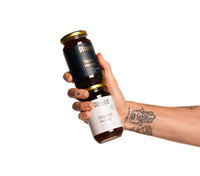
For people who prefer not to prepare fresh liver, Pheed makes freeze-dried beef liver capsules as a convenient capsule format.
That's the useful distinction: format and convenience.
It doesn't mean the capsules should automatically inherit every nutrient figure published for fresh liver, and it doesn't mean they should be described as nutritionally identical to eating fresh liver.
Product-specific nutritional claims should be based on evidence relevant to the finished product.
The bottom line
Beef liver doesn't need to be a miracle food to be an interesting one.
It's a completely different tissue from steak, with a distinctive nutritional composition that can include vitamin B12, preformed vitamin A, folate, riboflavin, niacin, iron, copper, zinc and selenium.
It contains haem iron rather than only non-haem iron.
Its vitamin A occurs substantially as preformed vitamin A rather than the carotenoid precursors commonly associated with plant foods.
And because some of those nutrients can occur at high concentrations, liver is also a useful reminder that nutrient dense doesn't mean more is always better.
You can eat it pan-fried.
You can sneak a little into mince.
You can make pâté.
You can choose a freeze-dried format if cooking liver isn't happening at your house.
But you don't need to call it nature's multivitamin, declare war on supplements or promise that it's going to transform someone's health.
Liver is interesting enough when you stick to the facts.


